Lakewood Today
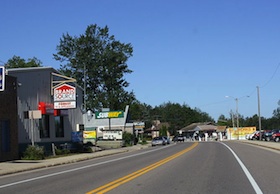
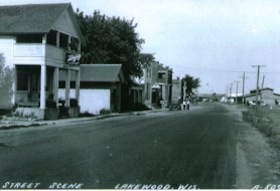
Today the Lakewood area serves as a popular get-away for visitors from all over the State and beyond. The close proximity to these small population centers and the relative isolation from major cities such as Chicago and Minneapolis continue to make the Lakewood area popular. The extreme distance to major air-hubs and other transportation centers make the area virtually off-limits to those from other parts of the country and help to keep the number of tourists and visitors to a minimum, further adding to the area's appeal for Wisconsinites.
Town of Lakewood Demographics/Geography
According to the United States Census Bureau, the town has a total area of 72.4 square miles (187.5 km²), of which, 70.8 square miles (183.4km²) of it is land and 1.6 square miles (4.1 km²) of it (2.20%) is water.
As of the census[2] of 2000, there were 875 people, 399 households, and 282 families residing in the town. The population density was 12.4 people per square mile (4.8/km²). There were 1,183 housing units at an average density of 16.7/sq mi (6.4/km²). The racial makeup of the town was 96.57% White, 1.71% Native American, 0.34% from other races, and 1.37% from two or more races. Hispanic or Latino of any race were 0.34% of the population.
There were 399 households out of which 22.6% had children under the age of 18 living with them, 63.7% were married couples living together, 3.3% had a female householder with no husband present, and 29.3% were non-families. 26.3% of all households were made up of individuals and 13.0% had someone living alone who was 65 years of age or older. The
average household size was 2.19 and the average family size was 2.60.
In the town the population was spread out with 18.7% under the age of 18, 3.0% from 18 to 24, 19.8% from 25 to 44, 30.5% from 45 to 64, and 28.0% who were 65 years of age or older. The median age was 51 years. For every 100 females there were 107.3 males. For every 100 females age 18 and over, there were 102.6 males.
The median income for a household in the town was $33,869, and the median income for a family was $37,500. Males had a median income of $31,719 versus $17,404 for females. The per capita income for the town was $18,281. Below the poverty line were 7.2% of people, 6.9% of families, 1.4% of those under 18 and 14.8% of those over 64.
Town of Lakewood Economy History
For many years the primary industry of Lakewood was timber, but in recent decades this has changed to the service industry. Most of the local revenue is generated by the tourist trade. The Chequamegon-Nicolet National Forest, which surrounds the area, is a working forest that has been clear-cut in the past and cut-over many times. As recently as the 1950s the Lakewood area was known for its virgin timber and pristine nature, but aggressive logging and clear-cutting significantly changed the face of the area. The Holt and Balcolm logging company set aside one tract of land in which they did not cut the original growth. This area, called the "Cathedral of Pines", was preserved as a result of the efforts of Lucy Rumsey Holt who influenced her husband, logger W.A. Holt, to leave it as virgin timber. Mrs. Holt used this area to teach Bible studies to her children and did not want the area disturbed. This 200 to 400 year old white pine and balsam old growth stand is also home to a Great blue heron rookery.
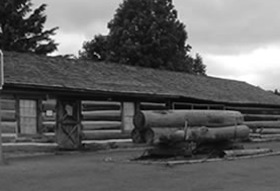
McCaslin Brook (also spelled McCauslin) was used as a means of transporting large quantities of logs to saw-mills or for transportation to major cities where the timber would be sold. The oldest logging camp in the United States can be found on what is now the McCaslin Brook Golf Course.